Have you ever thought about how many various eggs people like to eat? From birds alone — chicken, quail, even emu, and not to mention fish eggs, like caviar.
At the same time, have you also thought that, for example, turkey eggs aren’t as common? Like, if you ask around who has eaten them, likely there wouldn’t be that many folks around who have. Why’s that? Well, turns out, there are quite a few reasons behind that and they’re not that complicated to comprehend.
Have you ever wondered why we rarely ever eat turkey eggs?
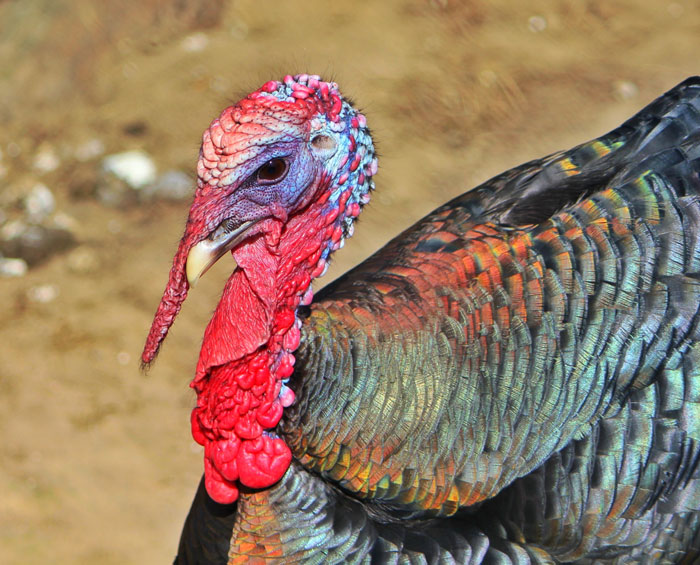
Close-up of a wild turkey with colorful feathers, highlighting the topic of turkey eggs compared to chicken, duck, and quail eggs.
Usually, when a conversation starts about edible eggs, people have chicken eggs in mind. After all, they’re the most widely consumed eggs of all. In fact, it is speculated that back in 7500 BCE, the chicken was most likely domesticated exactly for its eggs.
Yet, chicken eggs are not the only ones being consumed for food by people. Other bird eggs, such as duck , quail, and ostrich eggs, are being eaten, too, just a little less commonly than those of chickens.
Interestingly, their taste has nothing to do with this fact
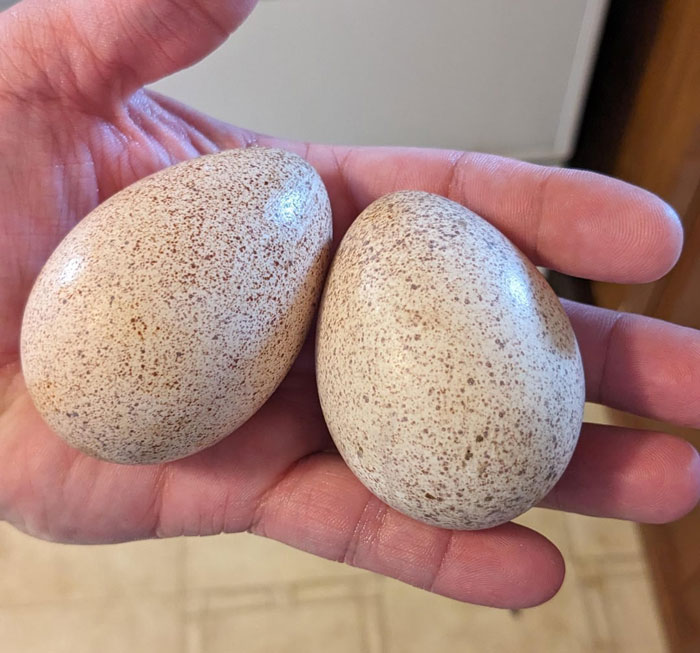
Hand holding two speckled turkey eggs, showcasing size and texture of turkey eggs compared to common poultry eggs.
Interestingly enough, birds’ eggs are the only ones subjected to consumption. Caviar , which is considered to be an extremely fancy food, are also eggs, only from fish (salt-cured roe). Or hilsa eggs, which are fairly popular in Bangladesh and Eastern India, also come from fish, as the name suggests.
People may also eat the eggs of reptiles and amphibians as delicacies, but it’s not as common as, let’s say, bird eggs. And yet, even among birds, there are some that are pretty rare as far as being an edible item – turkey eggs.
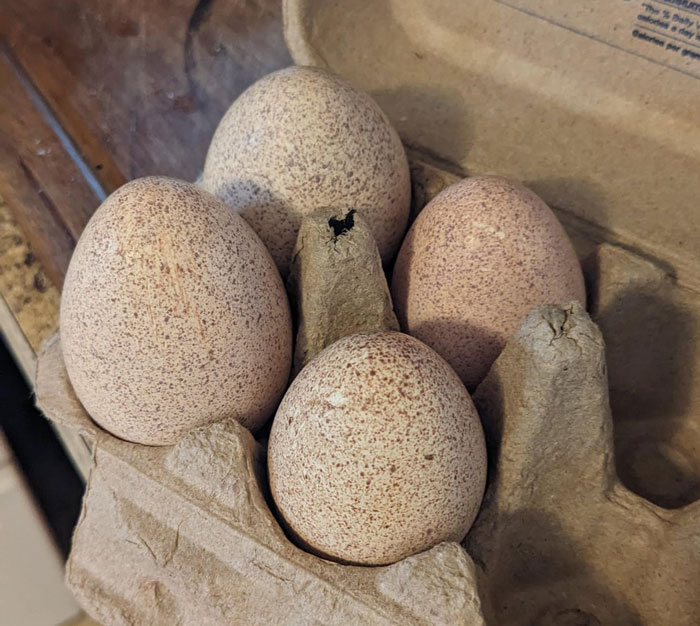
Speckled turkey eggs in a carton, highlighting an alternative to common chicken, duck, and quail eggs.
Like, have you ever had a turkey egg? If you did, you’re among the rare ones. But why are these eggs so hardly ever seen as a food option? After all, it’s not like turkeys are rare birds that are hard to come by. For example, in the United States, around 220 million turkeys are raised domestically, while around 7 million roam around. That’s quite a lot, isn’t it?
And it’s not like their eggs are inedible, tasteless, or anything like that. Actually, they’re fairly similar to those of chickens. There are only small differences between the two – shell strength, size, and their content’s richness.
Turns out, all the reasons simply come down to money
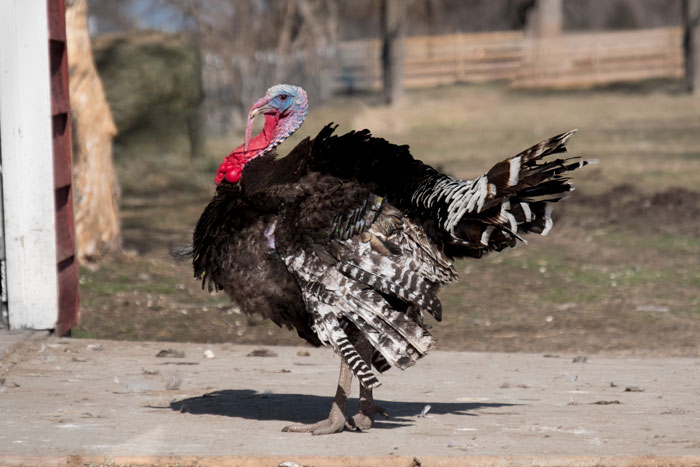
Wild turkey standing on farmyard ground, highlighting the concept of turkey eggs as an unusual food option.
Well, the reason behind the rarity of their eggs is pretty simple. According to The Self-Sufficient Backyard YouTube channel explanation , one of the reasons for this is the eggs’ size. Since they’re quite big, it’s rather hard to handle, package, and store them.
Additionally, turkeys aren’t as prolific as chickens. Turns out, while chickens lay eggs around once per day, turkeys do so at most twice per week. So, you know, it already makes them inherently rarer.
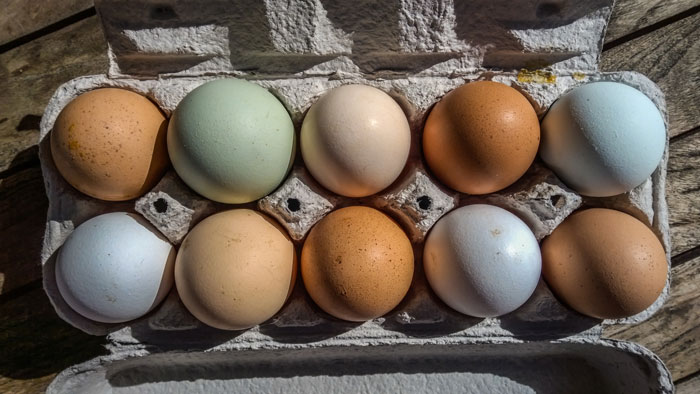
Carton of assorted eggs including chicken, duck, quail, and turkey eggs on a wooden surface in natural light.
If all of that wasn’t enough, it’s also more expensive to raise turkeys than chickens , which raises the price of an egg to around $3 per unit. Seeing how people didn’t like paying $6 a dozen for chicken eggs, it’s improbable that they would want to pay $36 for a dozen turkey eggs.
When you add all of these reasons together, it’s clear that the main reason behind turkey egg rareness is money, at least for the most part. Their size, infrequency, and raising conditions make the price one that not many would like to pay, thus making them more of a delicacy rather than a common thing in a pantry.
Turkey eggs are quite big, which makes their storage and logistics complicated; they aren’t as prolific as chickens and are pretty expensive to raise
Social media comment expressing surprise about turkey eggs after watching a video, mentioning common poultry eggs.

Comment on social media post mentioning trying emu eggs, with 6.8K likes and a heart reaction.

Social media post expressing surprise about turkeys laying eggs, highlighting curiosity about turkey eggs compared to chicken and duck eggs.

Comment about wild turkeys leaving eggs in a yard, referencing turkey eggs compared to chicken, duck, and quail eggs.

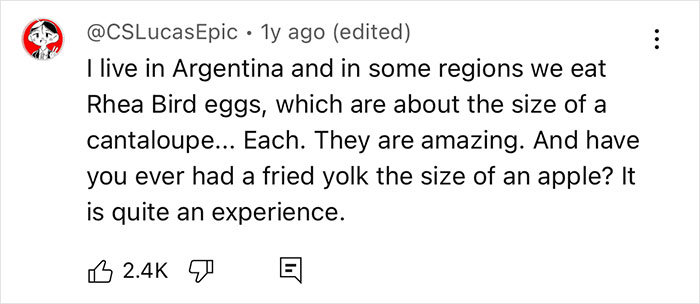
Comment about eating large Rhea Bird eggs in Argentina, mentioning their size and fried yolk experience, related to turkey eggs.
Screenshot of a social media comment humorously comparing a turkey to a pimp in a fur coat surrounded by working girls.

Comment from @TalentlessCooking discussing the sustainability and low production of turkey eggs compared to other poultry eggs.

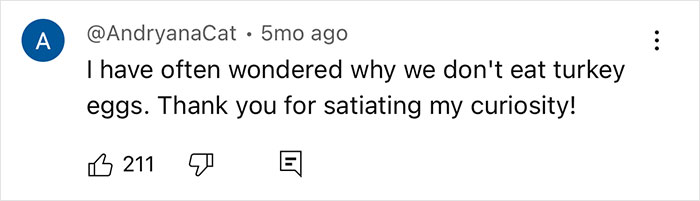
Comment expressing curiosity about why turkey eggs are not commonly eaten, mentioning chicken, duck, and quail eggs.
Comment about growing up eating turkey eggs in Canada where they were cheaper than other eggs.

Comment on YouTube channel from user @exidy-yt expressing appreciation for new understanding about turkey eggs.

User comment discussing the taste and thicker shells of turkey eggs compared to other poultry eggs.

Social media post sharing experience with turkey eggs from a Virginia farm during the holidays.

Social media comment appreciating trivia about turkey eggs and other poultry eggs shared by a user.

Comment on social media post expressing interest in turkey eggs, learning new facts about chicken, duck, and quail eggs with a heart emoji.

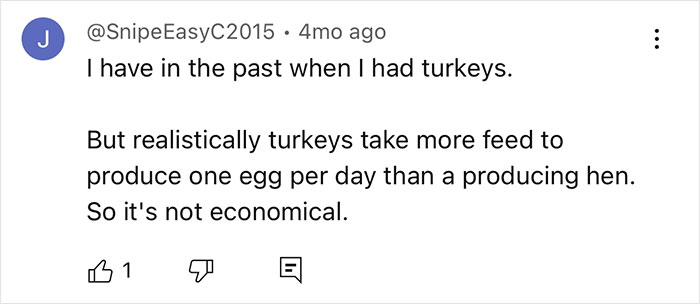
Screenshot of a comment discussing the economics of raising turkeys for turkey eggs compared to hens.
Thanks! Check out the results:

Anyone can write on Bored Panda. Start writing!
Follow Bored Panda on Google News!
Unlock an Enhanced Experience with Bored Panda Premium
Go ad-free, access unlimited content, and enjoy our sleek dark mode. Your favorite stories, uninterrupted.

No fees, cancel anytime


Olympian Makes Stunning Admission After Judge’s Conspicuous Scores Ignite Cheating Accusations