Do you know what the problem is with all the brilliant inventions of mankind? All of them, sooner or later, can be used for evil. Cars can be used by both taxi drivers and doctors, as well as robbers, computers are used not only by programmers or designers, but also by hackers, a baseball bat is not only a great sports equipment, but also a weapon…
There can be a huge number of examples, and one such example is a self-service checkout. A really outstanding achievement of human thought – because instead of standing in line at the grocery store, you just walk up and quickly pay. A real benefit, isn’t it? No matter how!
It turns out that self-service checkouts are a big problem for many people who are being sued by grocery stores for shoplifting. Lawyer Carrie Jernigan talks about this in her TikTok video, which immediately went viral, gaining about 2.6M views.
More info: TikTok
Self-checkouts are very comfortable, but at the same time, could become a phantom menace for almost any customer
A woman in an office setting discusses self-checkouts and legal advice from a criminal defense perspective.

So, according to Carrie Jernigan, who works as a criminal defense attorney, there are three categories of people who can usually be accused of shoplifting, with only the first category actually stealing something.
Person using a supermarket self-checkout, highlighting legal concerns from a criminal defense perspective.
Some people at the self-checkouts just try to cheat the system and steal something
Thus, in this category there are people who try to cheat the system – for example, by weighing a product, and then adding several new, unaccounted units of the same product to their cart. In the past, according to the Original Poster, it was easier to do this, but now the automatic systems have become smarter, but still, such crooks are quite common.
Text image of a criminal defense lawyer advising against using supermarket self-checkouts due to shoplifting charges.
Text discussing shoplifting charges related to self-checkouts in supermarkets.
For example, they scan a pre-prepared barcode of a cheaper product or indicate a smaller number of units in order to deceive the system. Sometimes this, unfortunately, works, although much less often than before.
Text about self-checkouts in supermarkets highlighting potential theft issues.
Text discussing criminal defense lawyer’s advice on self-checkout risks in supermarkets.
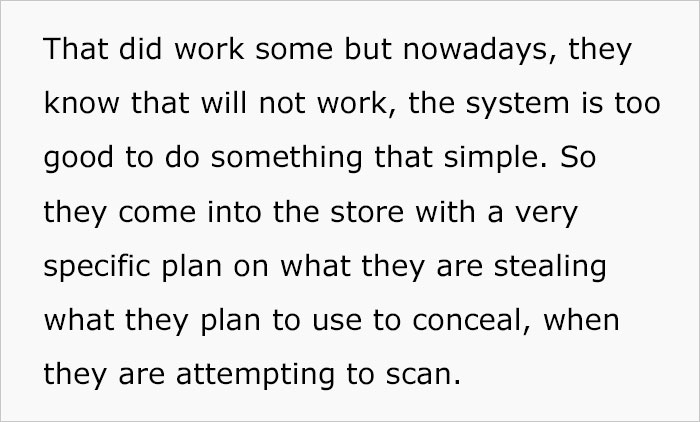
Text about barcode misuse at supermarket self-checkouts, highlighting potential legal issues explained by a criminal defense lawyer.
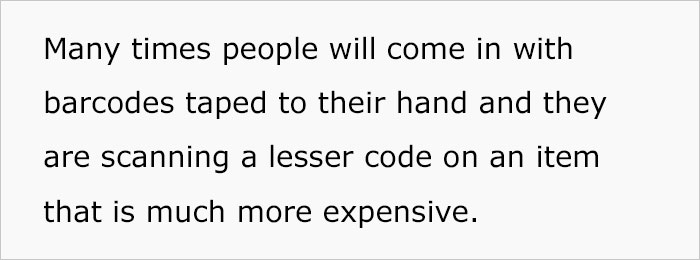
Some customers simply forget to scan an item while using self-checkouts
The second category of people are those, who, due to their own forgetfulness, do not scan some product, and then they are either tracked by a camera or an automatic turnstile at the exit reacts. Well, it is very disappointing in this case to get accused of shoplifting!
Image of text discussing asset protection issues and theft by mistake, related to a criminal defense lawyer’s advice.
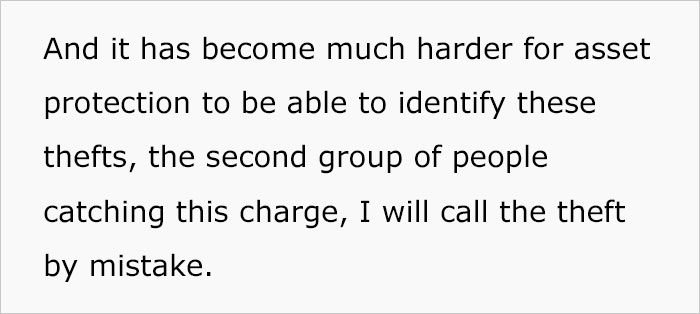
Text highlighting issues with forgetting to scan items at supermarket self-checkouts.
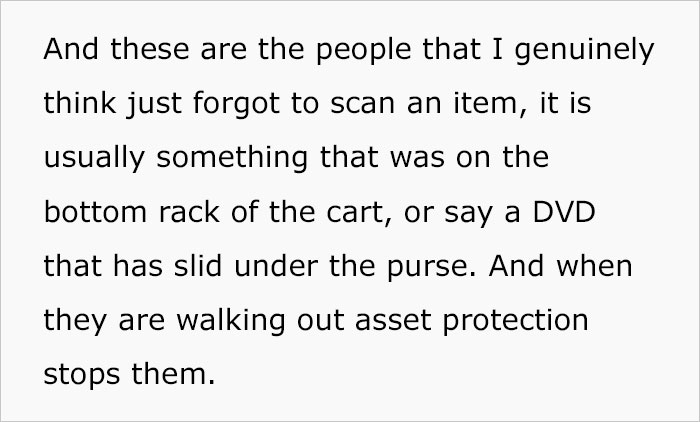
There are also people who get sued by supermarkets literally for nothing
But the most offensive, according to the OP, is to be in the third category, whose representatives never stole anything at all, and did not even think about something like that. And still, in this case, there is a possibility that the store will sue you…
Text discussing self-checkout issues in supermarkets, highlighted by a criminal defense lawyer.
Text on supermarket theft policies explained by a criminal defense lawyer.
In what way? This is where the human factor comes into play. For example, at the end of the reporting period, a shortage of several units of a rather expensive product is detected. What should they do? The security service starts tracking receipts for the purchase of similar goods, and then checks the recordings from security cameras by the time of purchases to identify buyers – what if they paid for one piece and took out another one secretly?
Text image explaining why a criminal defense lawyer advises against self-checkouts in supermarkets.
Text discussing how big box stores can obtain warrants with minimal evidence.
If you face such a lawsuit, you could either spend some time in jail or spend lots of time and nerves fighting to prove your innocence
If this sounds absurd to you, Carrie Jernigan will quickly dispel your doubts – such lawsuits are far from uncommon, and the prospect of spending a year in jail looks quite clear.
Text excerpt highlighting a lawyer discussing self-checkout risks in supermarkets.
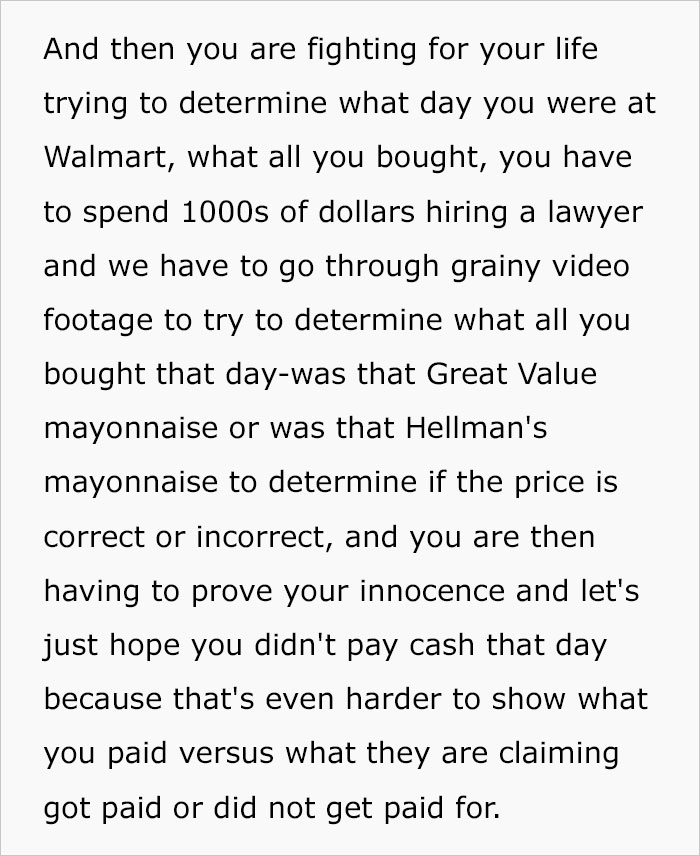
Text discussing issues with self-checkouts in supermarkets by a criminal defense lawyer.
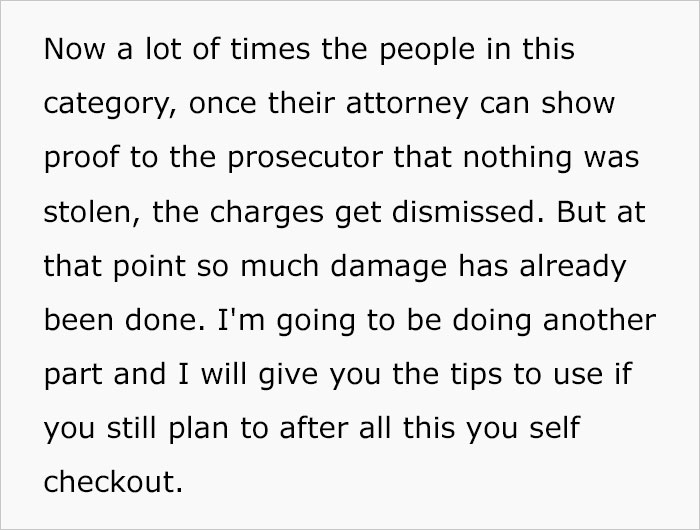
Or you will simply spend a lot of money on a lawyer and a lot of nerves on defending yourself, watching videos from the place of purchase together with the store security representatives and proving that you bought the cheapest mayonnaise, and not the most expensive one, as they state.
Text on avoiding supermarket self-checkouts with tips from a criminal defense lawyer.
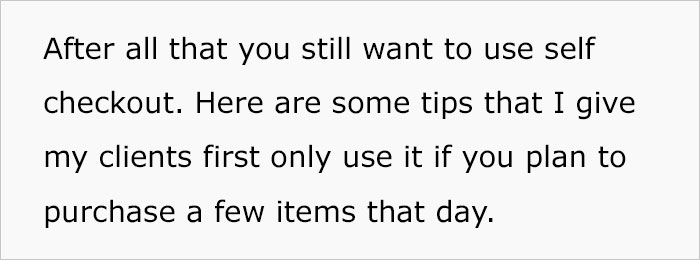
The first and most useful tip is to simply avoid self-checkouts
What should buyers do? The OP suggests an equally ingeniously simple solution – just avoid self-service checkouts in supermarkets whenever possible! Indeed, if you are served by a human cashier, then the likelihood of getting a lawsuit is much lower. “Just steer clear of self-checkouts,” the OP says.
Self-checkout machine in a supermarket aisle.
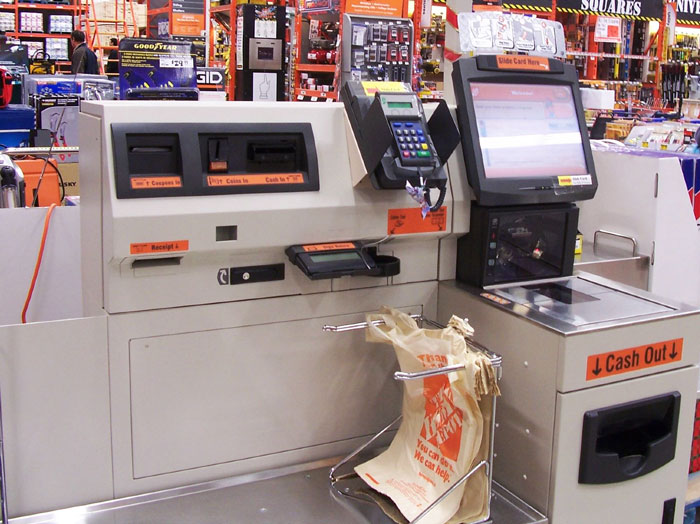
However, there are still some tips if you have to use self-checkout anyway.
If you still have to use the services of an automatic cashier, there are four basic rules. First, do not make large purchases at the same time. Secondly, if possible, pay by card, not cash.
@carriejernigan1 Reply to @afamily20202 ♬ original sound – LAWYER CARRIE
Unlock an Enhanced Experience with Bored Panda Premium
Go ad-free, access unlimited content, and enjoy our sleek dark mode. Your favorite stories, uninterrupted.

No fees, cancel anytime
:max_bytes(150000):strip_icc():focal(749x0:751x2):format(webp)/james-van-der-beek-melissa-joan-hart-clarissa-explains-it-all-01-021126-2fc520a096c546d78a9ae1173c5c4a29.jpg)

Olympian Makes Stunning Admission After Judge’s Conspicuous Scores Ignite Cheating Accusations