As more and more countries consider legalizing medically assisted euthanasia , the debate continues over how, when and who should be considered for the procedure, and what other options exist.
Most recently is the story of Emma Bray , a terminally ill English woman who passed away after choosing to voluntarily stop eating and drinking as a way to take control over her final moments of life.
But other stories have highlighted instances when the procedure seems to go wrong, or when it was seemingly suggested as a solution for a severely ill patient who does not want to d*e.
Depending on the circumstances, the public remains divided on the topic.
Emma Bray chose to voluntarily stop eating and drinking, known as VSED
Woman lying on a bed wrapped in floral blankets overlooking a green landscape as support group breaks silence on starvation case
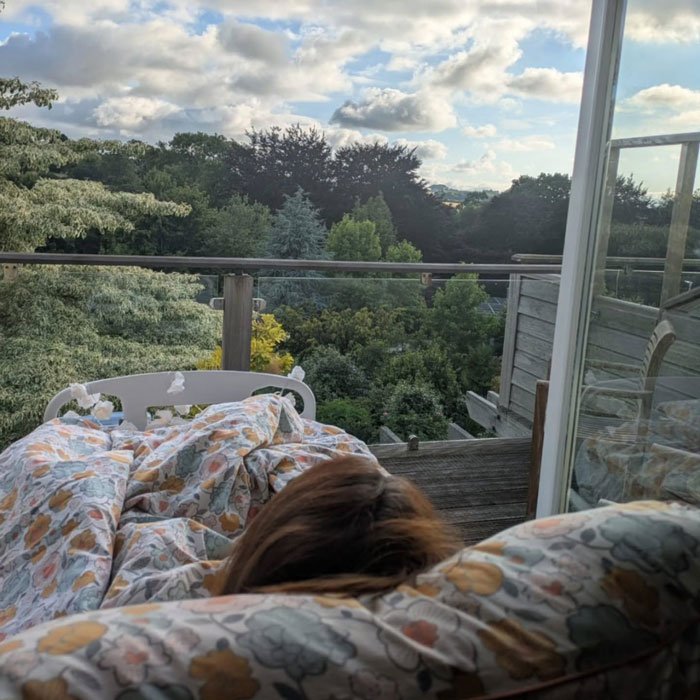
42-year-old Emma Bray was diagnosed with a motor neuron disease, the most common of which is amyotrophic lateral sclerosis, also known as ALS or Lou Gehrig’s disease.
The Cleveland Clinic says: “ALS causes rapid loss of muscle control leading to disability and eventually de*th. There’s no cure for MND.”
In mid-July, Bray passed away. In previous interviews, Bray had said that her decision to follow VSED (Voluntarily Stopping Eating And Drinking) was not taken lightly.
Hospital room with empty bed and flowers, symbolizing support group response after woman ended her own life by starving.
“I can no longer do any basic tasks. I can’t scratch an itch, push up my glasses, or move a bed sheet if I am too hot or cold. My talking is severely affected and I struggle to eat and it’s getting harder to breathe,” Bray had told The Mirror.
But perhaps the worst thing, Bray explained, was watching your children cry and get upset because their mother is deteriorating, and not being able to comfort them.
“Watching your children grieve for you and not being able to hug them is the most painful feeling ever,” she said before her passing.
“The last bit of parenting I can do is to limit the suffering and trauma they have to witness,” she concluded.
Bray chose to take control over the final moments of her life in the only way she could
Woman smiling and relaxing on a couch with pillows, representing support group breaking silence after woman ended life by starving.
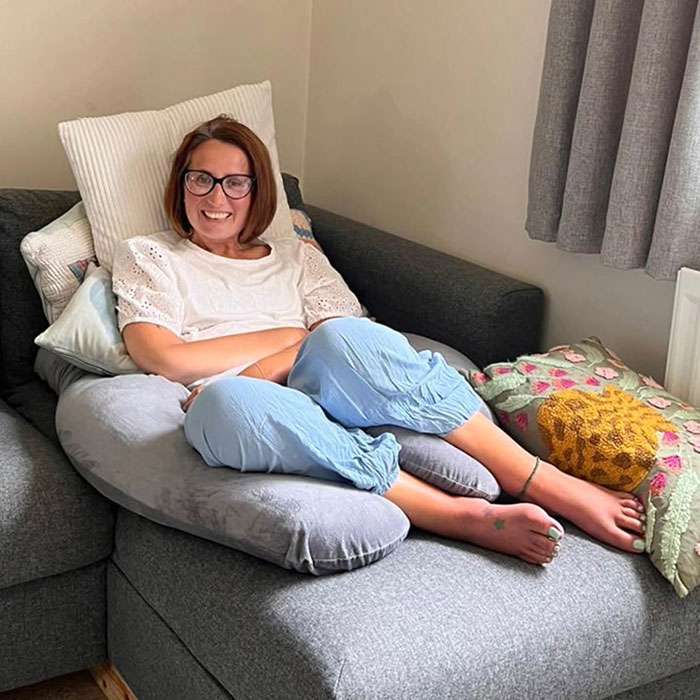
With such a debilitating and limiting demise awaiting her, Bray made the conscious and voluntary decision to stop eating and drinking to hasten the end of her life.
In recent years, Bray had become an advocate for medically assisted euthanasia, saying that had a bill been in place, it would have saved her family from suffering as they watched her deteriorate.
Only last month, lawmakers in England voted in favor of the “Terminally Ill Adults (End of Life)” law, which would legalize the procedure.
As per Reuters , the bill “now proceeds to Britain’s upper chamber, the House of Lords, where it will undergo months of scrutiny.”
VSED is not the same as medically assisted euthanasia
Hands of support group member holding wrist of woman in hospital bed after she ended her own life by starving.
But medically assisted euthanasia is different from what Bray chose, a distinction that a VSED Group in the U.K. said was important.
During an interview with Bored Panda , Aly Dickinson, who runs the ‘Living well and dying well South West’ group, explained that “VSED is a legal, self-directed decision to stop eating and drinking, leading to a natural d*ath,” and that it doesn’t involve “medical professionals actively ending life.”
Dickinson, an end of life doula in the U.K., said with VSED the only thing medical professionals provide is comfort and care.
She explained that planning is key when it comes to the decision to participate in VSED.
Things like: “choosing the place of d*ath (typically at home, or in a hospice if the hospice is willing to support VSED, “ as well as writing an end of life plan that includes a statement of Advance Refused Treatment.
Woman smiling in hospital bed with medical equipment nearby after woman ended her own life by starving support group breaks silence
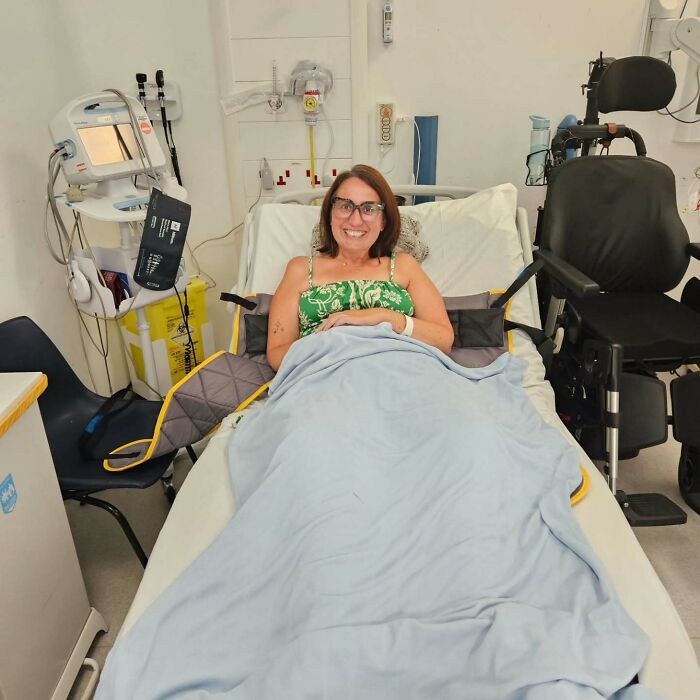
Dickinson said that when it comes to who should consider VSED, there are two main groups of people: “Those experiencing unacceptable suffering, or those seeking to pre-empt the final stage of d*ing, in order to avoid future suffering or a loss of dignity.”
Dickinson said VSED could also be suitable for those “diagnosed with early-stage dementia who retain mental capacity and wish to avoid a prolonged decline.”
Other possible candidates include people “living with a progressive terminal illness who have decision-making capacity,” or those “facing significant loss of independence due to frailty and chronic health issues, but who still have mental capacity.”
But Dickinson stressed that more needs to be done to educate the public about VSED.
“Stories like Emma Bray’s—shared so generously—helps bring much-needed visibility to this deeply personal choice,” she told Bored Panda.
In Canada, instances of misusing MAiD were investigated by the UN
Ver essa foto no Instagram Uma publicação compartilhada por North Devon Hospice (@northdevonhospice)
Unlock an Enhanced Experience with Bored Panda Premium
Go ad-free, access unlimited content, and enjoy our sleek dark mode. Your favorite stories, uninterrupted.

No fees, cancel anytime


Olympian Makes Stunning Admission After Judge’s Conspicuous Scores Ignite Cheating Accusations